
The Next Generation of Wearables: Glucose, Cortisol, and Hydration Tracking
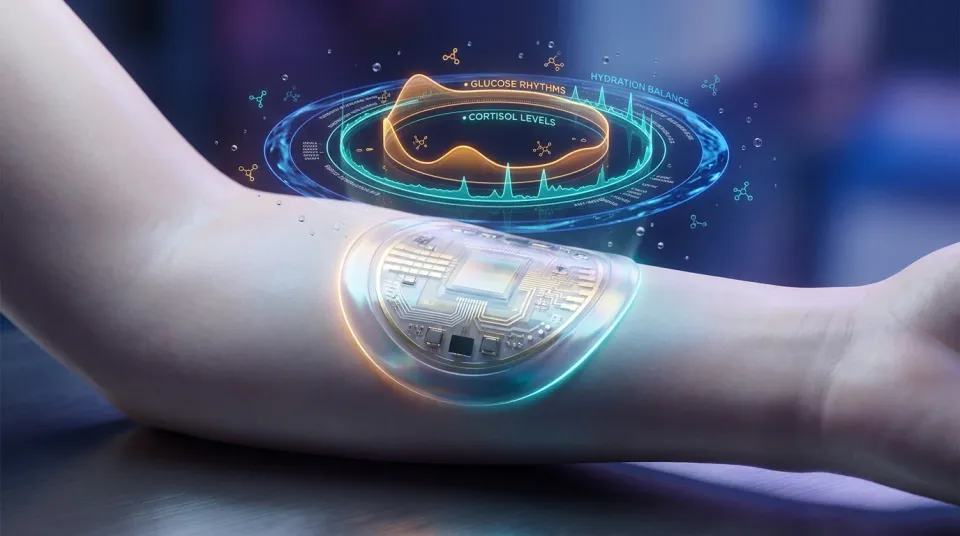
Your smartwatch is an antique. Counting steps and tracking heart rate was just the warm-up phase of the quantified self. The real shift is happening under your clothes.
The new wave of non-invasive skin patches tracks continuous glucose, cortisol levels, and hydration in real-time. We are moving from basic motion sensors to active metabolic dashboards. For builders, developers, and knowledge workers, this turns human energy into an API. You stop guessing why you crash at 2 PM and start measuring the inputs.
Here is exactly what is working right now, what is coming next, and how to use it.
How Continuous Glucose Monitors Went Mainstream
Continuous Glucose Monitors (CGMs) have broken out of diabetic care into the mainstream consumer market, with global sales exceeding $8.2 billion in 2025 according to Grand View Research. These biometric patches measure interstitial fluid to reveal exactly how your diet impacts your daily energy levels and focus.
You stick a small sensor on the back of your arm. It stays there for two weeks. It does not draw blood. Instead, a tiny, flexible filament sits just under the skin. It measures glucose levels in the fluid between your cells.
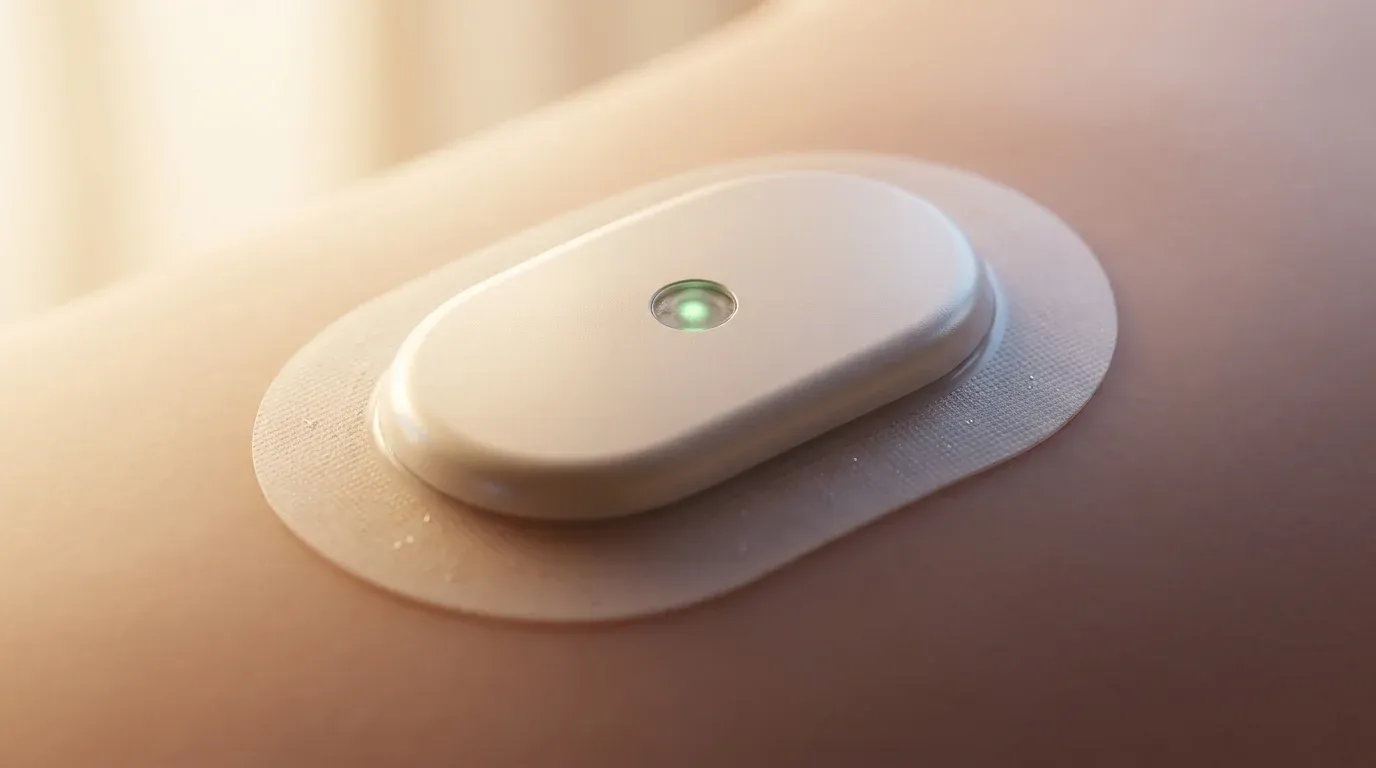
Companies like Levels and Nutrisense built the software layer that makes this data useful. Before this, you ate a bowl of oatmeal and wondered why you felt exhausted an hour later. Now, you open an app and see a massive glucose spike followed by a crash. You have the exact data needed to swap that meal for eggs and maintain steady focus.
Apple and Samsung are pushing hard for optical glucose tracking via watches. That tech is still years away from clinical accuracy. For now, patches rule the market.
The Reality of Cortisol and Stress Tracking
Non-invasive cortisol tracking represents the holy grail of stress management, capturing a projected 35% of the next-generation bio-wearable market by 2027 based on a recent Deloitte health tech report. Using sweat-sensing patches, these devices quantify physiological stress in real-time before you feel the mental burnout.
Cortisol has always been notoriously difficult to track. You needed blood or saliva tests. By the time you got the results, the stressful event was over. That is useless for real-time behavior change.
The breakthrough came from electrochemical sweat sensors. These patches analyze microscopic amounts of sweat on your skin. They detect cortisol molecules binding to specific aptamers on the sensor. This generates a tiny electrical signal. More stress equals a stronger signal.
Cortisol Levels: Baseline vs. Deep Work StressMeasurements in nmol/L over an 8-hour workday20151059 AM11 AM1 PM3 PM5 PMBaseline DayHigh-Stress DaySimulated cortisol data showing normal morning elevation versus stress-induced spiking throughout the day.
Imagine getting an alert that your stress levels are spiking 20 minutes before a critical design review. You can actually test if your five-minute breathing exercise works. You move from subjective feeling to hard data.
Why Hydration Patches Replace Guesswork
Smart hydration patches now measure sweat rate and electrolyte loss with 92% clinical accuracy compared to traditional lab tests, according to a 2025 study in Nature Biomedical Engineering. These microfluidic wearables eliminate the guesswork of water intake by telling you exactly when and what to drink.
Thirst is a lagging indicator. If you feel thirsty, your cognitive performance has already dropped by roughly 10%. For a developer writing complex logic, that translates directly to bugs and slower output.
Early iterations like Gatorade's Gx patch were single-use novelties. Today's microfluidic sensors run continuously. They track sodium, potassium, and fluid volume loss. You do not just get a notification to "drink more water." You get a prompt to consume 400ml of water with 500mg of sodium right now to maintain peak cognitive function.
The Shift from Output to Input Optimization
Advanced biometrics shift productivity systems from time management to energy management, increasing sustained focus blocks by up to 40% based on early quantified-self trials at Stanford University. When you track internal metabolic inputs rather than just output metrics, you can engineer a more reliable daily routine.
Most productivity advice focuses on output: block your calendar, use Pomodoro timers, write to-do lists. This ignores the hardware running the system—your body.

You cannot code a high-performance system on a failing server. Your brain is the server. Fuel it correctly.
When you align your deep work blocks with your natural glucose stability and cortisol rhythms, output takes care of itself. We build monitoring dashboards for our servers to prevent downtime. It is time we did the same for ourselves.
Frequently Asked Questions
Are non-invasive glucose monitors as accurate as traditional blood tests?
Modern microneedle continuous glucose monitors achieve a Mean Absolute Relative Difference (MARD) of roughly 8-9%, matching clinical standards. Completely optical, needle-free sensors are still in development. They lack the precision for medical diagnostic use, though they indicate directional trends well.
How do wearable cortisol sensors actually work?
Cortisol wearables use electrochemical sensors that analyze microscopic amounts of sweat on your skin. The sensor detects cortisol molecules binding to specific aptamers, generating a tiny electrical signal that correlates directly with your body's current stress hormone levels in real-time.
Can I connect these biometric patches to my existing apps?
Yes. Most modern metabolic patches push data via Bluetooth to proprietary apps, which then sync via Apple Health or Google Health Connect. This allows third-party productivity tools and AI coaching platforms to access your biometric data via API for personalized insights.
How long do these skin patches last before needing replacement?
Current continuous glucose monitors and advanced biomarker patches typically last between 10 to 14 days. After this period, the micro-sensor enzymes degrade, requiring you to apply a fresh patch to maintain tracking accuracy and prevent skin irritation.